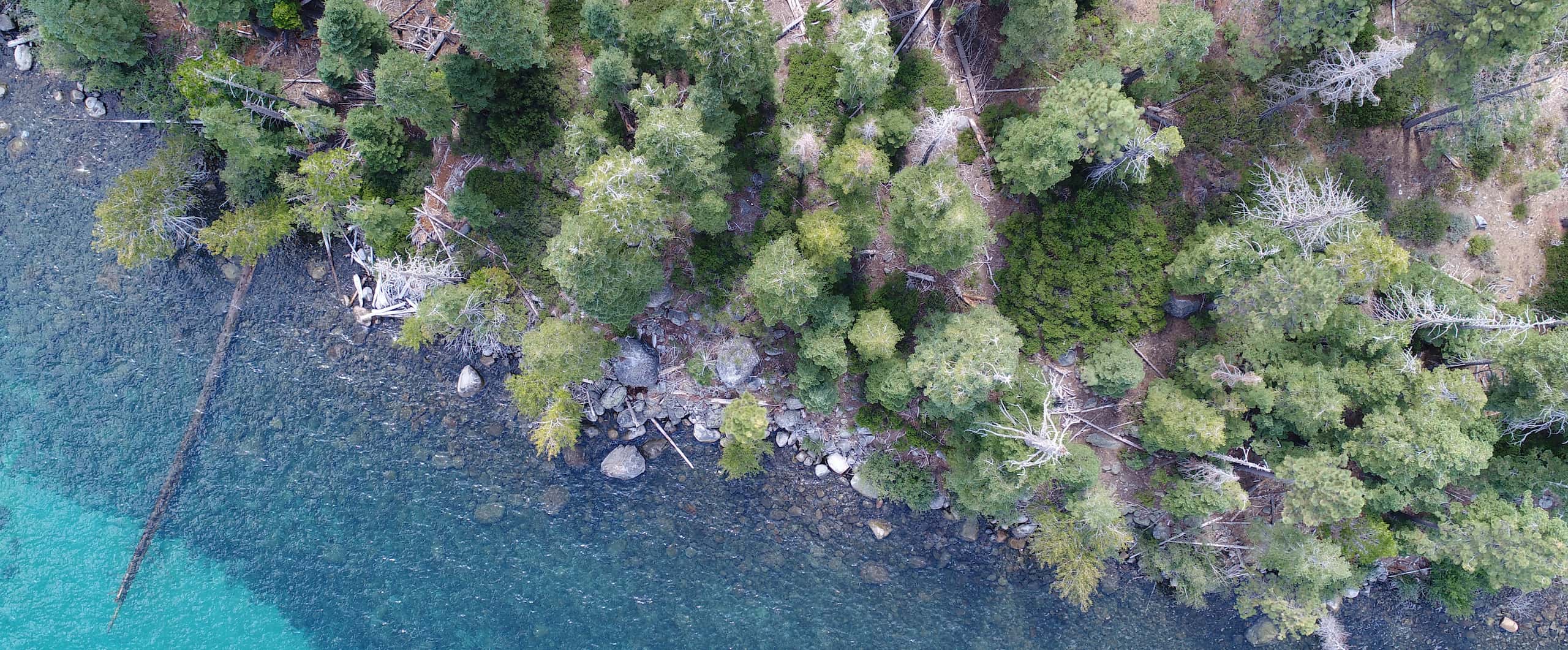
Forest Ecology Drone Pilot & Field Crew Leader
Employer
University of California, Davis (Forest Change Analysis Lab, Department of Plant Sciences)
Compensation
Approximately $26-29/hour, depending on qualifications and UC Davis HR assessment
Employment period
May 20 or 27 through September 14, 2026
Location
- 80%: remote field sites in conifer forests across California (Duty station: UC Davis, Davis, CA)
- 20%: office (computer lab) at UC Davis (with the option for some but not all work to be performed remotely)
Purpose
The Drone Pilot & Field Crew Leader will support FOCAL by piloting a quadcopter drone and leading a 2- to 3-member ground-based field crew in collecting data across California forests. The work will support two projects:
- An expansion of the Open Forest Observatory project, which is automating forest inventory by combining over-canopy drone-based reconstructions with under-canopy 360-degree (GoPro) imagery to better capture understory trees, shrubs, and logs. This project involves drone and ground imagery collection and ground-based vegetation inventory to support development and validation of automated inventory methods.
- A study of forest recovery 10-40 years post-wildfire that will use drone and NAIP imagery to develop a computer vision model for mapping trees establishing following decades-old fires across southern, central, and northern California. This project involves drone flights only, no ground-based imagery or manual inventory.
This position may be combined with the Extension: Field Logistics & Data Manager position and/or Extension: Data Scientist position for interested applicants with the necessary additional qualifications. This would extend the employment period and responsibilities.
Job description
- Field data collection (75%):
- Plan and execute (pilot) drone missions in remote, mountainous, forested terrain. Flight plans will be developed by the Pilot following mission parameters provided by the position supervisor.
- Lead a crew of 2-3 (including crew leader) in collecting ground-based data, including GoPro imagery and manual vegetation inventory data. Vegetation inventory will include mapping of individual trees and surveying transects to record the locations of shrubs and logs.
- Perform work alongside the other crew members while ensuring the crew’s work meets high quality standards, correctly follows all protocols, and is conducted safely and efficiently.
- Data and equipment management (15%):
- Manage and organize collected data, including transferring data to servers in the office.
- File flight plans and post-flight reports with the UC Drone Safety Office.
- Ensure that equipment and data are managed properly (including charging drone batteries, quality-checking data sheets, and submitting completed data sheets to the supervisor at regular intervals).
- Perform data entry and imagery inspection/interpretation in the office. Imagery interpretation work may include annotating vegetation types in drone and GoPro imagery to support computer vision model training.
- Logistics, travel, safety, and communication (10%):
- Lead the crew in locating remote field sites using mobile devices, topographic maps, and compasses
- Make decisions in the office and the field regarding project logistics and allocation allocation of crew time (e.g., determining the order in which to visit study plots to minimize hiking and driving time)
- Communicate crew issues or other problems to the supervisor; ensure vehicle maintenance schedule is followed.
- Maintain records and awareness of safety information, including evacuation routes and nearby medical facilities.
The 2-3 person ground-based crew will support project #1 (summarized above), which will constitute approximately the 60% of the field season. During the remaining time (project #2), a field assistant will be present for the majority of field days to support the Pilot in safety and equipment management.
Due to the remoteness of the field sites, the incumbent should expect to spend up to 7 consecutive days in the field (see Work schedule, below) with frequent relocations of camp (included in work hours) during each field hitch.
Work location & camping
The duty station is Davis, CA (UC Davis). Field hitches will begin and end at UC Davis. While conducting fieldwork, the crew will primarily be car camping near the project study sites on National Forests. Camping will usually be “dispersed camping” (undeveloped areas with no facilities that are adjacent to remote roads) but will occasionally be in campsites (with campsite fees paid by employer). Camping location will change frequently as the crew moves to different study areas, and the crew leader will often be expected to identify suitable camping locations in advance and/or during the field hitches.
Work schedule
The default work schedule will generally consist of 8 10-hour days, followed by 6 days off (80 work hours every 2 weeks), beginning and ending on Wednesdays. The 8-day periods will likely include 1-3 days of office work, usually the last of the 8 days, to document the previous field period and prepare for the next. Some but not all of this office work may be performed remotely. Travel between Davis and the field sites, and between field sites, is included in work hours. Active drone flying periods will be unlikely to exceed 2 hours per day, with the remaining hours spent performing ground data collection, scouting the next day’s flight location, moving camp (if necessary), and charging/maintaining equipment. The 1-3 office days (10-30 hours) may be spread over more shorter work days if practical and/or preferred. The incumbent is expected to arrange and coordinate schedules with crew members and the position supervisor to achieve the greatest efficiency.
The work may occasionally require some logistical coordination outside of the normal 8-day workweeks (e.g., to review/prepare field safety plans, print datasheets, plan flight missions and site access, and coordinate crew member schedules). When this work occurs outside the normal schedule of 80 hours every 2 weeks, it will generate overtime at 1.5x the hourly rate. It will not exceed 10 hours of extra time every 2 weeks and will generally be less than 5 hours.
During fire season, smoke and fire hazards may necessitate rapid adjustments to work location or schedule (e.g., shifting departure and/or return dates to avoid hazardous fire weather conditions). In the event of extended periods of fire or smoke hazards, the position supervisor will work to identify alternative work locations that avoid hazards, but during peak fire season, continuous full-time employment cannot be guaranteed.
Transportation
The Pilot and crew will be expected to share in driving a UC Davis fleet vehicle to the field sites. Field hitches will begin and end at UC Davis. Travel to field sites will require extensive highway driving as well as driving on rough, remote, poorly-signed backcountry roads.
Equipment and gear
All necessary field equipment will be provided. Communal camping gear (e.g., water jugs and cooking gear) will also be provided. The incumbent will be responsible for their own personal camping gear and field clothing.
Training
Training in field methods, equipment, and safety will be provided. Valid wilderness first aid (or more advanced) certification, or willingness to complete training prior to the start of the field season, is required (registration costs will be covered by the employer).
Work conditions/physical demands
The incumbent must be in very good physical condition. Field conditions will often be hot with limited shade, but can also be very cold and potentially wet. Work may require hiking up to 2 miles per day (though usually much less) with a pack through sometimes difficult and steep terrain, without trails, and sometimes with dense and/or thorny understory vegetation. Comfort working under these conditions is essential! Because the manual inventory work will occur in unburned forests, shrub cover will rarely be excessively dense, but areas of dense vegetation will occur. Work will involve camping, often with no facilities (see Work location, above). Work requires careful, legible handwriting and careful attention to detail.
Minimum qualifications
- Bachelor’s degree or equivalent experience in ecology, environmental science, forestry, geographic information science, data science, robotics, or a related field
- FAA Part 107 Remote Pilot Certificate
- Valid driver’s license and willingness to drive to and between remote field sites
- CPR and Wilderness First Aid certification (may be accomplished after job offer is made, with registration cost paid by the employer)
- Experience piloting a drone to collect aerial imagery from mountainous field sites
- Experience with ground-based field data collection
- Experience operating a vehicle on rough roads
- Experience hiking and camping in remote locations with no facilities
- Experience using GIS software for geospatial mapping and/or analysis
- Ability to maintain a positive attitude in physically uncomfortable and/or demanding conditions
- Strong quantitative and organizational skills
- Attention to detail
- Ability to work independently and make appropriate executive decisions without a supervisor present
- Experience successfully collaborating with individuals from diverse backgrounds
Desired qualifications
- Skilled in navigating on- and off-trail using topographic maps, compass, and handheld GPS units
- Excellent organizational skills for planning, data management, and equipment management
- Skilled in identifying California trees and shrubs
- Experience in a group leadership role
- Experience working with complex data recording equipment
Application due date
Review of applications will begin on December 22, 2025 and continue until the position is filled.
To apply
Please submit a cover letter (including your interest in the position, relevant experience, and availability dates), CV/resume, unofficial transcripts from any completed (within last 3 years) and in-progress degree programs, and contact information for three references (including name, organization, email, and relationship to you) using this Google form. The form includes more detailed instructions. For questions about the position, contact Derek Young, djyoung@ucdavis.edu.