Forest Ecology Field Crew Member & Drone Pilot Assistant
Employer
University of California, Davis (Forest Change Analysis Lab, Department of Plant Sciences)
Compensation
Approximately $18.50/hour
Eligible applicants
Current UC Davis students with a graduation in Spring 2026 or later (also see minimum qualifications, below)
Employment period
June 17 to September 16 for fieldwork (full time), optionally continuing into Fall Quarter for data interpretation in the office (part time). Optional pre-season work to obtain a FAA Remote Pilot Certificate, if desired, may begin this Spring Quarter 2026 (see Job Description, below).
Location
- 80%: remote field sites in forests across California (Duty station: UC Davis, Davis, CA)
- 20%: office (computer lab) at UC Davis (with the option for some but not all work to be performed remotely)
Purpose
The Field Crew Member will support two projects:
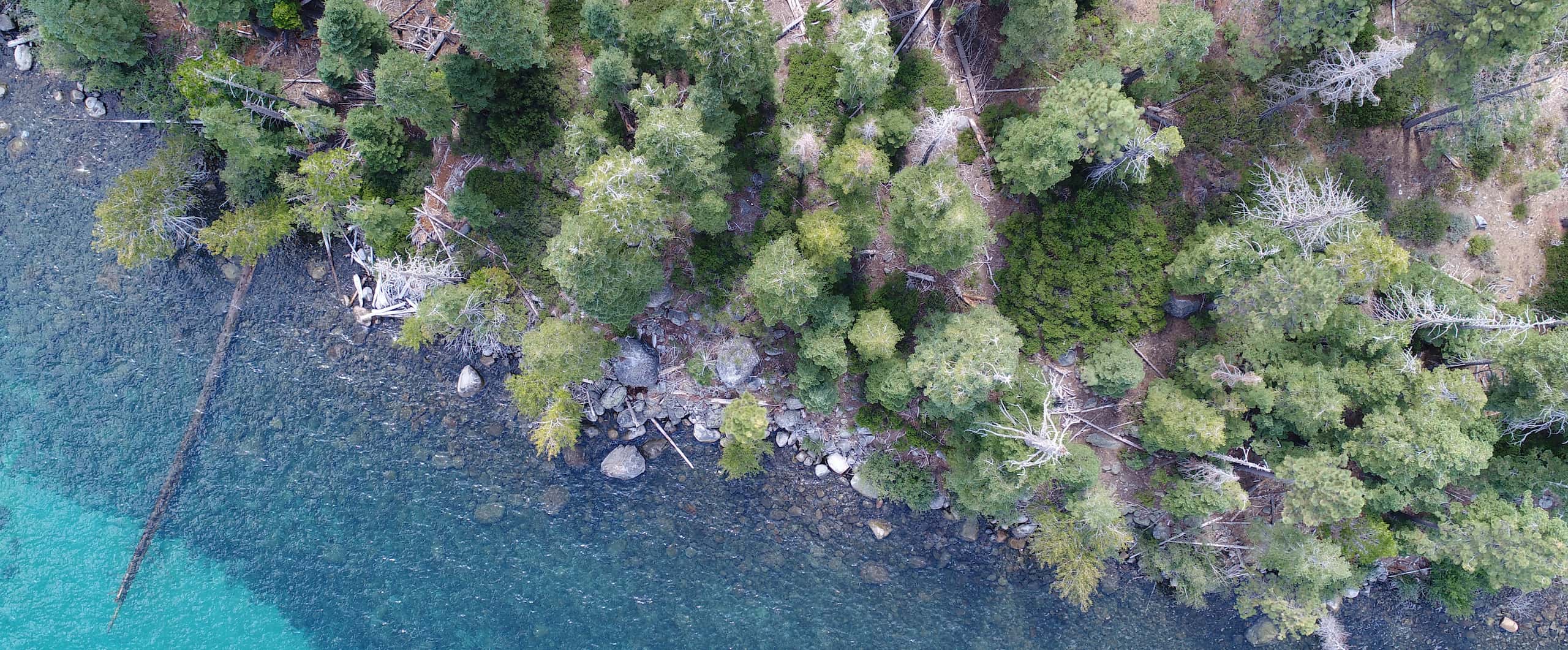
- An expansion of the Open Forest Observatory project, which is automating forest inventory by combining over-canopy drone-based reconstructions with under-canopy 360-degree (GoPro) imagery to better capture understory trees, shrubs, and logs. This project involves drone and ground imagery collection and ground-based vegetation inventory to support development and validation of automated inventory methods.
- A study of forest recovery 10-40 years post-wildfire that will use drone imagery to develop a computer vision model for mapping trees establishing following decades-old fires across southern, central, and northern California. This project involves drone flights only, no ground-based imagery or manual inventory.
A professional Drone Pilot & Crew Leader (separate position) will pilot the drone and lead ground-based fieldwork. A third crew member will be present for most of the work on Project #1, but most work on Project #2 will be performed by a two-person crew.
Job description
The crew member is responsible for conducting field sampling, interpreting collected imagery, and serving as an assistant to the drone pilot. The crew member will be responsible for the following:
Field data collection & logistics (80%): Collect ground-based data, including GoPro imagery and manual vegetation inventory data. Vegetation inventory will include mapping of individual trees and surveying transects to record the locations of shrubs and logs. Drive to and between field sites; navigate to sites on remote roads. Ensure the field equipment is managed and maintained properly. Provide safety and logistical support to the Drone Pilot. Assist the crew leader in maintaining records and awareness of site safety, including evacuation routes and nearby medical facilities.
Data management and imagery interpretation (20%): Manage and organize collected data, including transferring imagery to servers in the office and entering handwritten data into spreadsheets. Inspect collected drone and GoPro imagery for quality; annotate vegetation types in drone and GoPro imagery to support computer vision model training.
Due to the remoteness of the field sites, the crew member should expect to spend up to 7 consecutive days in the field at a time (see Work schedule, below) with frequent relocations of camp (included in work hours) during each field hitch.
This position provides an opportunity to gain on-the-job training in professional drone piloting for research applications. If the applicant is interested in and willing to study for and obtain their FAA Part 107 Remote Pilot Certification during spring quarter, the applicant will have the opportunity to pilot some of the summer drone flights, and may be assigned lead pilot duties for periods when the professional drone pilot is unavailable. Studying for and taking the FAA exam is an estimated 40-hour commitment spread throughout the quarter, and up to 20 hours of the time will be paid work hours. The exam registraion fee will also be paid. The supervisor is availalbe to review any challenging FAA exam material prior to the exam and will provide free access to an online training course.
Work location & camping
The duty station is Davis, CA (UC Davis). Field hitches will begin and end at UC Davis. While conducting fieldwork, the crew will primarily be car camping near the project study sites on National Forests or other public lands. Camping will usually be “dispersed camping” (undeveloped areas with no facilities that are adjacent to remote roads) but will occasionally be in established campsites (with campsite fees paid by employer). Camping location will change frequently as the crew moves to different study areas.
Work schedule
The default work schedule will generally consist of 8 10-hour days, followed by 6 days off (80 work hours every 2 weeks), beginning and ending on Wednesdays. The 8-day periods will likely include 1-3 days of office work, usually the last of the 8 days, to document the previous field period and prepare for the next. Some but not all of this office work may be performed remotely. Travel between Davis and the field sites, and between field sites, is included in work hours. The 1-3 office days (10-30 hours) every two weeks may be spread over more shorter work days if practical and preferred. The incumbent is expected to coordinate schedules with fellow crew member and the crew leader to achieve the greatest efficiency.
During fire season, smoke and fire hazards may necessitate rapid adjustments to work location or schedule (e.g., shifting departure and/or return dates to avoid hazardous fire weather conditions). In the event of extended periods of fire or smoke hazards, the position supervisor will work to identify alternative work locations that avoid hazards, but during peak fire season, continuous full-time employment cannot be guaranteed.
Transportation
Crew members will be expected to share in driving a UC Davis fleet vehicle to the field sites. Field hitches will begin and end at UC Davis. Travel to field sites will require extensive highway driving as well as driving on rough, remote, poorly-signed backcountry roads.
Equipment and gear
All necessary field equipment will be provided. Communal camping gear (e.g., water jugs and cooking gear) will also be provided. Crew members will be responsible for their own personal camping gear and field clothing.
Training
Training in field methods, equipment, and safety will be provided. Valid Wilderness First Aid (or more advanced) certification, or willingness to complete training prior to the start of the field season, is required (registration costs will be covered by the employer).
Work conditions/physical demands
Crew members must be in very good physical condition. Field conditions will often be hot with limited shade, but can also be very cold and potentially wet. Work may require hiking up to 2 miles per day (though usually much less) with a pack through sometimes difficult and steep terrain, without trails, and often with dense and/or thorny understory vegetation. Comfort working under these conditions is essential! Work will involve camping, often with no facilities (see Work location, above). Work requires careful, legible handwriting and careful attention to detail.
Minimum qualifications
- Current undergraduate in ecology, natural resource management, or related natural science field
- Experience in scientific data collection through coursework and/or job experience
- Comfort with and ability to maintain a positive attitude in physically demanding and/or uncomfortable conditions (see Work conditions/physical demands, above)
- Experience camping in remote locations with no facilities
- CPR and Wilderness First Aid certified (certification may be accomplished after job offer is made, with registration cost paid by the employer)
- Valid driver’s license; willingness to share driving responsibilities
Desired qualifications
- Skilled in identifying California trees and shrubs
- Experience working with complex data recording equipment
- Experience operating a vehicle on rough, remote roads
- Experience with geospatial data manipulation and GIS
Application due date
Review of applications will begin on February 24, 2026 and continue until the position is filled.
To apply
Please submit a cover letter (including your interest in the position, relevant experience, and availability dates), CV/resume, and contact information for three references (including name, organization, email, and relationship to you) using this Google form. The form includes more detailed instructions. For questions about the position, contact Derek Young, djyoung@ucdavis.edu.